


Eco-anxiety, a growing concern tied to the climate crisis, impacts mental health and the ability to take action. For young climate activists, this chronic worry about environmental collapse often leads to emotional exhaustion, burnout, and feelings of helplessness. However, when managed effectively, it can also inspire meaningful action and community connection.
Key insights from the study:
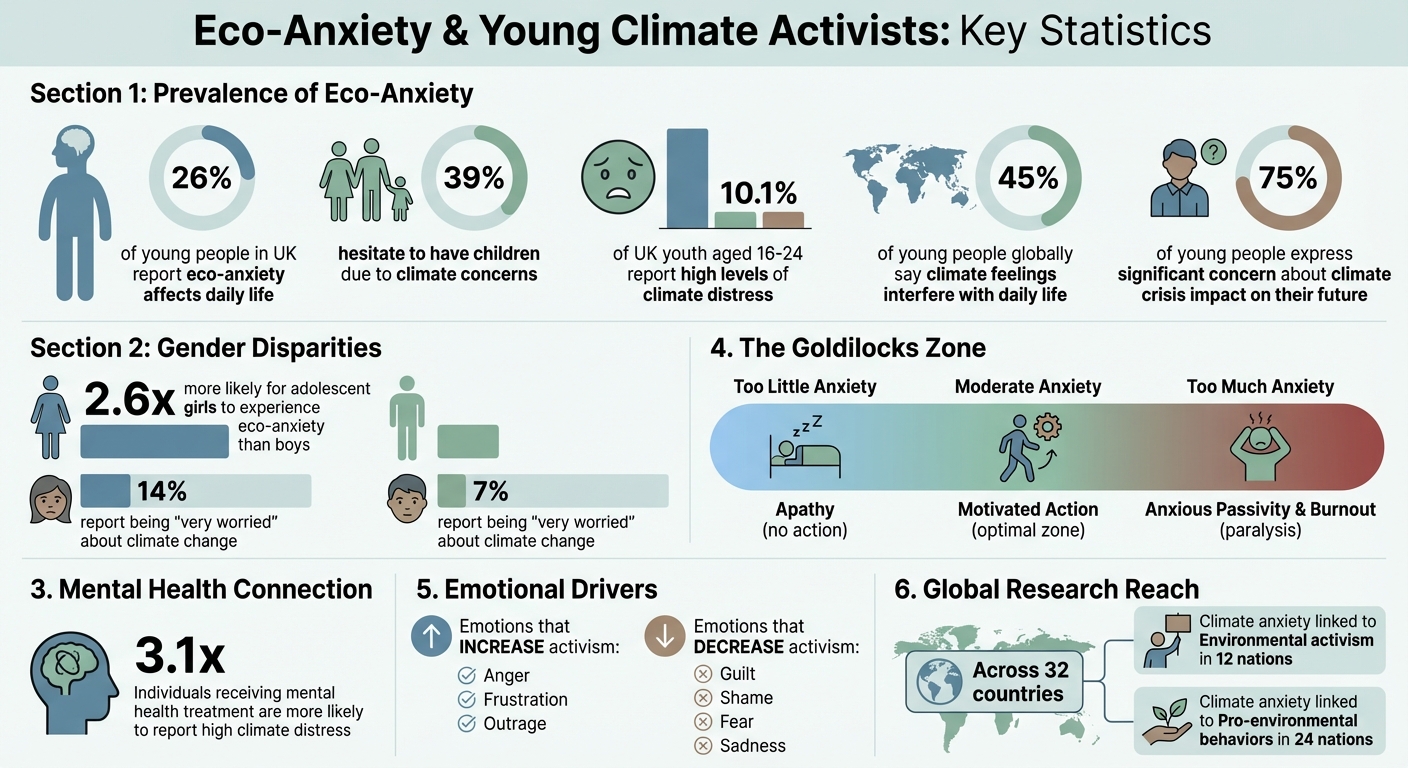
- 26% of young people in the UK report eco-anxiety affects daily life; 39% hesitate to have children due to climate concerns.
- Moderate eco-anxiety motivates action, while chronic levels can lead to "anxious passivity" and burnout.
- Activist burnout often stems from overwhelming climate messaging and social isolation.
- Women and girls are disproportionately affected, with adolescent girls 2.6 times more likely to experience eco-anxiety than boys.
Strategies to support activists include:
- Coping tools: Mindfulness, therapy (e.g., CBT, ACT), and limiting distressing media exposure.
- Community support: Peer-led groups like Climate Cafés and Resilience Circles help process emotions and build solidarity.
- Organisational changes: Climate groups integrating mental health support can reduce burnout and sustain activism.
Eco-Anxiety Statistics and Impact on Young Climate Activists
What is Eco-Anxiety and Activist Wellbeing?
What is Eco-Anxiety?
Eco-anxiety refers to the psychological toll of witnessing or experiencing the effects of climate and ecological breakdown. The American Psychological Association defines it as "the chronic fear of environmental cataclysm that comes from observing the seemingly irrevocable impact of climate change and the associated concern for one's future and that of next generations".
For activists, eco-anxiety is more than a single emotion - it spans a range of feelings, including distress, anger, fear, and grief. It represents a heightened emotional response to perceived climate threats. What makes eco-anxiety particularly complex is its dual nature: it can motivate positive environmental action or, conversely, lead to feelings of helplessness and burnout.
Researchers have identified a "Goldilocks zone" of climate anxiety - an optimal level of concern that encourages action without overwhelming mental health. Too little anxiety results in apathy, while too much can cause paralysis, often referred to as "anxious passivity". This delicate balance underscores the importance of understanding activist wellbeing in the context of eco-anxiety.
What is Activist Wellbeing?
To fully grasp activist wellbeing, it's essential to consider how eco-anxiety impacts it.
Activist wellbeing is characterised by the absence of negative outcomes - such as burnout, depression, and emotional exhaustion - alongside the presence of positive elements like social connection, purpose, and a sense of agency. Without effective coping mechanisms, prolonged eco-anxiety can lead to emotional fatigue and psychological burnout, which diminishes the ability to engage constructively in environmental efforts.
One major threat to activist wellbeing is the "misalignment of values" - when strong environmental concerns clash with a lack of action from organisations or systems. This dissonance can result in "moral injury", a profound sense of betrayal that accelerates burnout. However, the relationship between activism and wellbeing is a two-way street: while distress can fuel participation, the sense of community within activist groups can help mitigate that distress, fostering resilience and emotional support.
How Eco-Anxiety Affects Young Climate Activists
For young activists, eco-anxiety can have a profound impact on their overall wellbeing.
Young people often experience eco-anxiety through fear, anger, hopelessness, and behavioural changes. A global survey of 10,000 young individuals revealed that over 45% felt their concerns about climate change negatively affected their daily lives and ability to function. In the UK, 10.1% of those aged 16–24 reported high levels of climate distress, frequently prioritising environmental concerns over personal finance, careers, or relationships.
This emotional weight can lead to functional difficulties, such as trouble sleeping, socialising, managing emotions, or concentrating on work and studies. Abhay Singh Sachal, founder of Break the Divide, captures this struggle:
"Among the youth, there's this deep sense of burnout, from taking climate action in a physical sense to the emotional and mental burnout that comes from viewing all the world's issues through a climate lens and feeling guilty for not doing enough".
Interestingly, gender plays a role in how eco-anxiety is experienced. Adolescent girls are 2.60 times more likely to experience eco-anxiety compared to boys. A large Norwegian study found that 14% of girls reported being "very worried" about climate change, compared to just 7% of boys.
Research Findings on Eco-Anxiety in Activists
Emotions and Experiences of Activists
Recent studies have shown that climate activists experience a wide range of emotions, going far beyond simple worry. Between August and October 2020, Dr. Emma Lawrance from Imperial College London conducted a survey of 539 UK residents aged 16–24. The results? A striking 10.1% of participants reported high levels of climate distress - concerns that even outweighed worries about personal career prospects or finances.
The emotional responses identified in the study fall into two main categories: "externalising" emotions, like anger, frustration, and outrage, and "internalising" emotions, such as sadness, fear, guilt, and shame. Interestingly, anger often fuels activism, while guilt and shame appear to have the opposite effect, reducing pro-environmental behaviour. These emotional dynamics are critical because they influence whether activists stay engaged or step back from the movement. In short, emotions play a pivotal role in shaping the level and type of activist involvement.
How Eco-Anxiety Affects Activist Participation
Research spanning 32 countries highlights how the impact of eco-anxiety depends largely on which emotions dominate. While anger and frustration can energise activism, overwhelming distress can have a paralysing effect.
Dr. Emma Lawrance sheds light on this emotional paradox:
"In some people the feelings of distress can drive them to act, while in others it becomes overwhelming and negatively impacts their mental health and wellbeing".
The data backs this up. In the UK youth study, emotions like anger and frustration were found to be strong motivators for climate activism, particularly in public actions such as protests and organising. On the flip side, feelings of guilt, shame, sadness, and fear were linked to lower levels of action-taking. Without effective coping mechanisms, prolonged eco-anxiety can lead to emotional exhaustion and psychological burnout.
Globally, 45% of young people reported that their feelings about climate change interfered with daily life. In the UK, 26% of young people said eco-anxiety disrupted their day-to-day functioning. Beyond individual emotions, broader social and economic factors add an extra layer of complexity to the emotional toll activists face.
Social Inequalities and Emotional Burden
Eco-anxiety isn’t experienced in a vacuum - social and economic factors play a significant role. In the UK, socio-economic status adds another layer to the picture. Those from higher socio-economic backgrounds, as measured by the Family Affluence Scale, tend to report higher levels of climate distress. Meanwhile, individuals with lower financial security often face more direct psychological impacts from climate events, such as flooding, which can lead to conditions like PTSD and depression.
Pre-existing mental health issues further compound this vulnerability. Research in the UK found that individuals currently receiving treatment for mental health conditions were 3.116 times more likely to report high levels of climate distress compared to those with no history of mental ill-health. This creates a troubling cycle: those most emotionally vulnerable are hit hardest, while those with better resources and support systems are more likely to sustain their activism without burning out.
Building Resilience in Climate Activism
Risks That Lead to Activist Burnout
Understanding what drives activist burnout is crucial to tackling it effectively. One significant factor is the use of catastrophic climate messaging, which can leave individuals feeling overwhelmed and paralysed. The UK Health Security Agency highlights this concern:
"The way climate change is communicated and framed can influence mental health outcomes. Catastrophising, or approaches which are overwhelming, can increase anxiety and distress".
Another contributing factor is social isolation, which can amplify the emotional toll activists face. Feeling disconnected from others often makes it harder to manage the heavy psychological burden of climate activism.
Identifying these risks is the first step towards implementing meaningful coping strategies.
Coping Strategies That Work
To combat eco-anxiety, activists can adopt three broad coping approaches:
- Problem-focused strategies: Taking direct action, such as lifestyle changes or participating in environmental initiatives.
- Meaning-focused strategies: Cultivating hope and a sense of purpose to stay motivated.
- Emotion-focused strategies: Practising mindfulness and limiting exposure to distressing media.
Community-based initiatives like Climate Cafés and listening circles provide safe, supportive environments where activists can share their experiences and process their emotions together. On a more individual level, professional therapies such as Cognitive Behavioural Therapy (CBT), Acceptance and Commitment Therapy (ACT), and dynamic psychotherapy have shown success in easing climate-related mental health challenges. The UK Health Security Agency underscores the importance of this approach:
"Supportive, empowering communication that includes coping strategies and opportunities for action can help build resilience".
While personal coping mechanisms are essential, the collective nature of activism itself plays a powerful role in building resilience.
How Activism Builds Resilience
When supported by effective coping strategies, activism not only drives change but also strengthens personal and community resilience.
Taking part in collective action can significantly reduce the mental health impact of climate anxiety, including its links to conditions like Major Depressive Disorder. Activist groups often create "communities of care" where shared experiences help individuals process emotions and combat feelings of isolation. For example, in late 2025, The Resilience Project launched 8–10 week Resilience Circles in Kenya. These peer-led groups, facilitated by graduates of the 2025 Resilience Fellowship, provided spaces for participants to address eco-anxiety together.
Striking a balance - often referred to as the "Goldilocks zone" - is key. This means maintaining a level of climate anxiety that motivates meaningful action without becoming overwhelming or counterproductive. With this balance, activism becomes not just a tool for change but a source of collective strength and support.
sbb-itb-24fa5d9
Creating Resilient Activist Communities
Group Practices That Support Activists
To build strong activist communities, it's crucial to focus on emotional wellbeing as much as campaign objectives. This means adopting practices that nurture resilience within the group while tackling external challenges.
Peer-led Resilience Circles provide safe spaces for young activists to share and process the emotions tied to climate issues. Starting meetings with emotional check-ins and using approaches like the "step-up, step-down" method ensures everyone gets a chance to contribute. Shifting to dialogue-driven meetings encourages understanding and reduces negativity. Proactively establishing conflict resilience systems - such as neutral listening spaces and robust support networks - can also help. Initiatives like Climate Cafés and listening circles allow activists to express intense feelings, such as eco-anger and eco-grief, in a supportive setting. These platforms help individuals see their emotional responses as natural reactions to difficult circumstances.
Adding Mental Health Support to Climate Organisations
In addition to group-focused strategies, climate organisations must integrate mental health support into their core operations. With 75% of young people expressing significant concern about the climate crisis's impact on their future, prioritising mental health is no longer optional. Organisations can embed professional support by formalising policies that create safer spaces, addressing issues like microaggressions and power imbalances. Partnering with networks such as the Climate Psychology Alliance, Climate Psychiatry Alliance, or the Good Grief Network brings in expert resources and resilience training.
Frameworks like the "10 Steps to Personal Resilience and Empowerment" offer tools to help activists manage emotional burdens before they lead to burnout. Incorporating meaning-focused coping strategies can transform feelings of distress into constructive hope, fostering long-term engagement. These approaches actively combat eco-anxiety, strengthening both individual and collective resolve.
"The best way to take care of the environment is to take care of the environmentalist"
- Thich Nhat Hanh
How Activist Apparel and Messaging Build Identity
Symbolic resources, such as activist apparel, play a key role in reinforcing identity and solidarity. Wearing clothing with slogans like "Be The Change" or other environmental messages helps activists embody their values. Sacha Wright, Research and Curriculum Coordinator at Force of Nature, describes this as activating their "agency muscle".
"By expressing that you care about the future of our planet, you're acting in solidarity with a global community of people inheriting a world at risk."
- Sacha Wright, Research and Curriculum Coordinator, Force of Nature
Brands like Rebelwear UK (https://rebelwearstore.com) offer apparel that visibly unites activists, much like the Mental Health Foundation's "Green ribbon" campaign for mental health awareness. These symbols help combat the loneliness and stigma often tied to eco-anxiety, reminding activists that they are part of a larger movement. Collections focusing on social justice, animal rights, and environmental awareness foster a sense of purpose and community. By shifting the focus from feelings of helplessness to collective action, such messaging encourages individuals to see themselves as part of a larger solution. With 84% of the British public recognising the mental health impact of the climate crisis, wearing activist apparel has become a meaningful way to engage in "hopeful action." This not only strengthens group identity but also alleviates the isolation that often accompanies eco-anxiety.
'How I turned my eco-anxiety into climate activism'
Conclusion
Research highlights that addressing mental health is integral to sustaining climate activism. Among young people in the UK aged 16–24, 10.1% report experiencing high levels of climate distress. Prolonged eco-anxiety can weaken resilience, ultimately hindering collective action. These insights pave the way for strategies that balance emotional well-being with activism.
Interestingly, there seems to be a "Goldilocks zone" for climate anxiety - where feelings of distress are enough to drive action but not so overwhelming that they lead to despair or inaction. While individual approaches can offer temporary relief, collective action plays a vital role in building resilience. By coming together, activists not only find an outlet for their concerns but also foster community bonds and a sense of "active hope" that helps buffer against emotional strain. A global study across 32 countries found that climate anxiety was linked to environmental activism in 12 nations and pro-environmental behaviours in 24, showing how anxiety, when channelled effectively, can inspire meaningful change.
"Collective climate activism can enhance young people's hope and provide connection to community, both of which can promote personal resilience."
- Ans Vercammen, Researcher, The University of Queensland
Peer support, mindfulness practices, and a shared sense of identity are key to turning anxiety into action. Social networks are particularly important in preventing eco-anxiety from leading to paralysis. Community initiatives like Climate Cafés, listening circles, and therapeutic frameworks such as Acceptance and Commitment Therapy (ACT) provide much-needed emotional support and practical tools to sustain long-term activism.
Collective identity also plays a crucial role in maintaining resilience. Shared practices, symbolic resources, and community-led efforts strengthen the sense of belonging. For instance, Rebelwear UK’s activist apparel not only symbolises solidarity but also combats feelings of isolation. By recognising the importance of mental health alongside campaign goals, the climate movement can cultivate the endurance required to tackle future challenges. Simple yet powerful actions, like wearing Rebelwear UK apparel, help transform individual struggles into a unified, resilient movement.
FAQs
How can eco-anxiety be managed to prevent burnout among climate activists?
Managing eco-anxiety thoughtfully can help prevent burnout and keep activists energised and focused. A good starting point is to set clear boundaries between activism and personal life. Make space for regular breaks, get enough sleep, eat balanced meals, and stay active - these simple habits are key to protecting your mental and physical wellbeing. Adding mindfulness or grounding exercises to your routine can also ease climate-related stress while keeping your motivation strong.
Another effective approach is to turn anxiety into collective action. Joining local climate groups, getting involved in community projects, or even wearing activist-themed clothing can create a sense of belonging and remind you that you're part of a larger movement. For instance, apparel from Rebelwear UK can act as a symbol of solidarity and connection with others who share your mission.
Lastly, if you find feelings of distress becoming too much, don't hesitate to seek mental health support. The UK offers publicly funded resources like helplines and counselling services, which can provide professional guidance when needed. By blending self-care, community involvement, and professional support, eco-anxiety can be transformed into a driving force for positive action while keeping you resilient and balanced.
How does community support benefit the mental health of climate activists?
Community support is a cornerstone in maintaining the mental well-being of climate activists. It helps turn eco-anxiety into proactive efforts by offering emotional support, easing feelings of isolation, and building a sense of shared mission. Studies indicate that activists with strong support networks are better equipped to channel their concerns into impactful environmental actions, reducing the risk of burnout.
In the UK, many young people grappling with climate distress often express frustration over the lack of action and a sense of helplessness. Community groups provide an antidote to these emotions by encouraging collaboration, sharing resources, and celebrating achievements. These connections not only uplift overall mental health but also keep motivation and determination alive, enabling activists to remain committed to the pursuit of environmental justice.
Why are women and girls more affected by eco-anxiety than boys?
Women and girls tend to feel the weight of eco-anxiety more heavily, largely because they often have a stronger emotional bond with environmental issues and a heightened sense of responsibility when it comes to climate change. Studies indicate that they are more prone to anxiety-related impacts and often develop a deeper connection to environmental concerns, which intensifies their worry about the planet's future.
This heightened sensitivity can also be linked to societal roles. Women and girls frequently take on caregiving responsibilities and play key roles in supporting their communities. These expectations can make them more attuned to the potential dangers posed by environmental crises, further deepening their sense of urgency and concern.