


Your clothing choices impact more than just your appearance - they influence the environment, workers' rights, and social causes. By choosing ethically made clothing, you can help reduce waste, support fair wages, and advocate for important issues. Here's why it matters:
- Fast Fashion Harms: Cheap, trendy clothes often exploit workers and damage the planet. They contribute to pollution, waste, and unsafe labour conditions.
- Ethical Alternatives: Brands with transparent practices, sustainable materials, and fair wages offer a better way forward.
- Activist Apparel: Clothing with bold messages can spark conversations and support causes like climate action or social justice.
- UK Impact: Local brands like Rebelwear UK combine activism with responsible production, making it easier to align your wardrobe with your values.
Every purchase is a choice. Opting for ethical clothing helps create a fairer and more sustainable future.
What Is Sustainable Fashion? Debunking Myths & Explaining Ethical Fashion
The Problem: Fast Fashion Harms People and Planet
The fast fashion industry prioritises speed and profit above all else, often at the expense of both the environment and human welfare. The push for cheap, trendy clothing comes with serious consequences for our planet and the people behind its production. Let’s take a closer look at how these practices are affecting our environment, exploiting workers, and influencing communities across the UK.
Environmental Damage from Fast Fashion
Fast fashion is a major contributor to environmental degradation. The industry is responsible for increasing greenhouse gas emissions, depleting water resources, and contaminating waterways with chemical dyes. On top of that, textile waste continues to pile up as discarded clothing often ends up in landfills, where synthetic materials can take centuries to break down. Even washing these garments releases microplastic fibres into water systems, which not only harm marine life but also find their way into the food chain.
Worker Exploitation in Global Supply Chains
The low prices of fast fashion come at a steep cost to workers. Many garment workers in manufacturing hubs are paid far below a living wage and endure unsafe working conditions. The Rana Plaza disaster in Bangladesh is a stark reminder of the dangers of cutting corners to save costs. Workers are often forced to meet tight production deadlines, leading to long hours and little or no additional pay. This relentless demand for cheap clothing perpetuates a cycle of exploitation in some of the world's poorest regions.
The UK's Fast Fashion Problem
In the UK, fast fashion has become a dominant force, with consumers frequently buying new clothes to keep up with ever-changing trends. Aggressive marketing and rapid style turnover have created a culture where garments are treated as disposable, short-lived items. The rise of online shopping and high return rates further exacerbate the environmental toll. Local recycling systems often struggle to cope with the sheer volume of discarded clothing, and much of it is sent abroad to areas ill-equipped to handle the waste. Meanwhile, the race to produce cheaper clothes has shifted manufacturing to countries with weaker labour and environmental protections, leaving vulnerable communities to bear the brunt of these practices.
The Solution: Choose Ethical and Responsible Clothing
Fast fashion takes a toll on both people and the environment, but there’s a better way forward. Opting for ethical brands that prioritise fair practices and sustainability can make a real difference. By supporting companies that align with your values, you contribute to a movement that upholds social justice and cares for the planet.
What to Look for in Ethical Brands
When choosing ethical brands, look for those that are open about their production processes, sustainability efforts, and commitment to fair practices. Many of these companies share detailed information about how and where their products are made, helping you make informed decisions. Some even use their designs to address important social issues, turning fashion into a medium for advocacy.
Activist Apparel: Fashion That Speaks Out
Clothing can be more than just something you wear - it can be a statement. Activist apparel transforms garments into a tool for raising awareness, sparking conversations, and inspiring action. Whether the focus is social justice, environmental concerns, or political issues, message-driven clothing encourages dialogue and invites others to think differently. Local activist-led brands often amplify this impact by staying closely connected to the communities they serve.
Why Support Local and Activist-Led Brands
Choosing local brands helps counter the harmful effects of global supply chains while supporting homegrown talent and initiatives. By opting for UK-based activist apparel, you’re backing authentic designs and community-focused efforts. Take Rebelwear UK, for instance. Their collections champion causes like social justice, environmental awareness, and political activism with bold slogans such as "Be The Change", "Free Palestine", and "Stop Eating Animals." With prices starting at just £15.99, Rebelwear UK makes it accessible to align your wardrobe with your values, all while supporting local businesses. This choice not only strengthens community ties but also empowers individuals to work together for meaningful change.
sbb-itb-24fa5d9
Case Study: How Rebelwear UK Leads Ethical Fashion
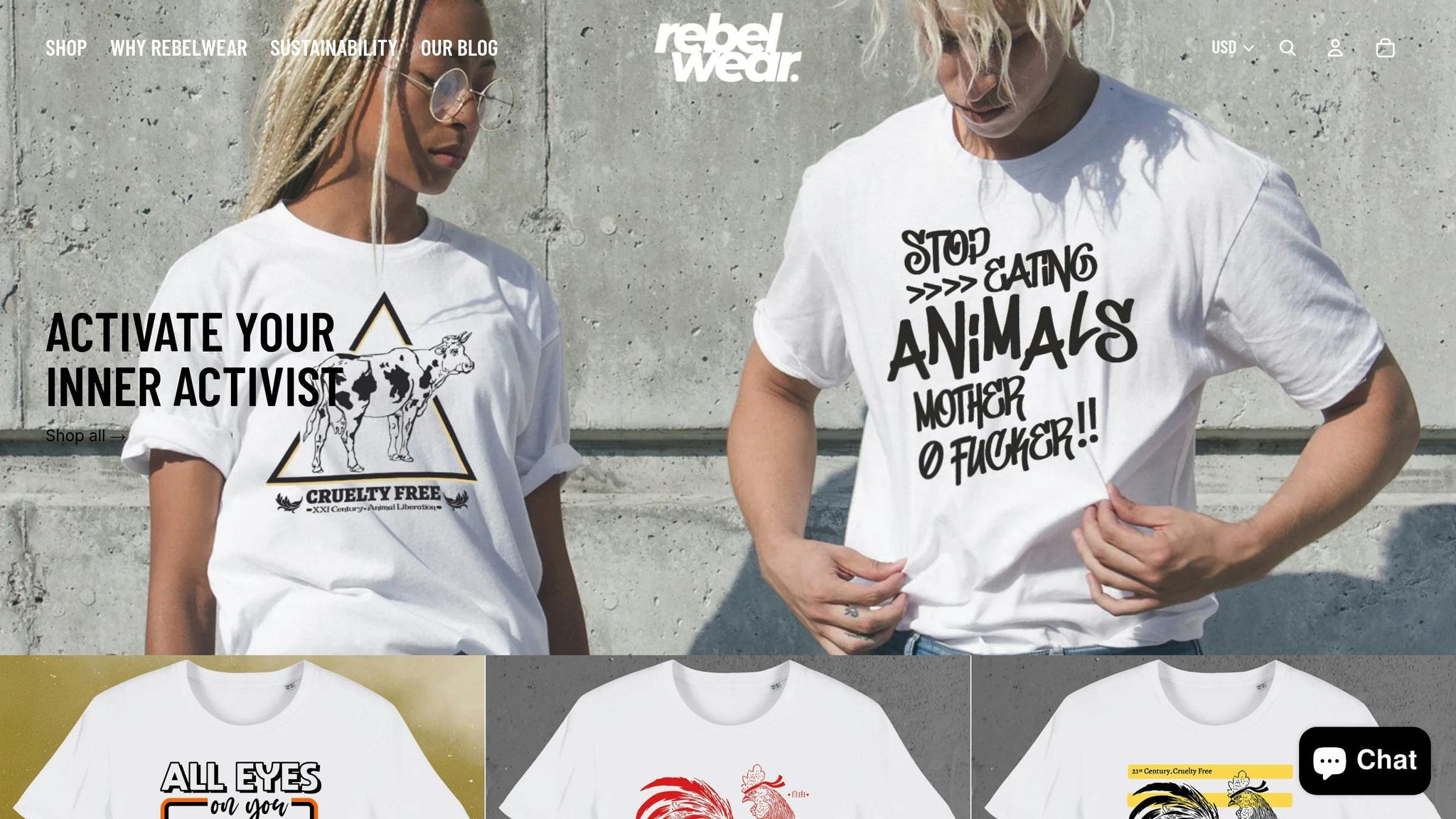
Rebelwear UK shows how fashion can blend bold activism with responsible production methods. Their approach allows customers to champion sustainability and fairness without giving up on quality or affordability.
Ethical Practices at Rebelwear UK
Rebelwear UK places a strong emphasis on sustainability and fair labour practices. The brand is dedicated to responsible manufacturing, setting a high bar in the fashion industry.
"All of our clothing is made in 100% Sedex approved factories and we will never compromise on that - sustainability over low prices every day." - R.E.B.L. UK
By committing to Sedex-approved facilities, Rebelwear UK ensures that every item adheres to strict standards covering labour rights, environmental care, and ethical business practices. Regular audits verify fair wages, safe working conditions, and ethical compliance. This focus on durability over mass production helps reduce waste, challenging the throwaway culture associated with fast fashion.
Rebelwear UK takes these values further by crafting collections designed to inspire conversation and action.
Collections That Drive Change
Rebelwear UK’s collections seamlessly combine style with activism, encouraging discussions on social and environmental issues. For instance, the Free Palestine collection allows wearers to show solidarity, while Rebelwear Originals feature powerful slogans like "Be The Change." These collections are more than just clothing - they’re a way for customers to express their beliefs while enjoying expertly crafted pieces.
"r.e.b.l is not available en mass and thats because we are not fast fashion. Each r.e.b.l product drop contains a very limited number of pieces so act swiftly to secure these exclusive pieces!" - R.E.B.L. UK
Their limited-edition releases not only create a sense of exclusivity but also align with ethical production by preventing overproduction and maintaining high-quality standards.
Fair Pricing for UK Consumers
Rebelwear UK proves that ethical fashion can be both accessible and high-quality. Their transparent pricing reflects the real costs behind their products - fair wages, sustainable materials, and responsible manufacturing - showing that ethical fashion doesn’t have to break the bank.
This case study highlights how thoughtful choices in fashion can turn clothing into a powerful vehicle for social change.
Match Your Wardrobe with Your Values
Building on the idea of ethical fashion, it’s worth taking a closer look at how your wardrobe reflects your personal values. By making intentional choices, you can transform your collection into one that aligns with what matters most to you.
How to Review Your Current Wardrobe
Start by going through your wardrobe piece by piece. Check the labels to see where items were made and which brands produced them. Pay attention to quality indicators like sturdy seams, durable fabrics, and secure fastenings - these are signs of well-made clothing.
Assess each item based on its durability, its value to you, and whether it aligns with your principles. Items that no longer fit your values or show signs of poor quality might be better suited for donation or textile recycling programmes.
Thinking in terms of cost per wear can also help shift your perspective. For instance, a £50 jumper that you wear dozens of times is far better value than several cheaper alternatives that barely leave your wardrobe.
How to Make Better Purchases
Before buying anything new, take the time to research. Don’t rely on marketing buzzwords - dig deeper to verify a brand’s ethical practices. Ethical companies tend to be open about their supply chains, manufacturing processes, and labour conditions.
Look for certifications that confirm a commitment to fair labour and sustainable practices. These labels can be a reliable way to identify brands that prioritise worker welfare and environmentally friendly production methods.
Be cautious of greenwashing. Terms like "eco-friendly" and "sustainable" can be misleading if not backed by specifics. Instead, look for brands that clearly outline the materials they use, where their products are made, and how they treat their workers.
Focus on buying timeless, versatile pieces that stand the test of time. Classic designs that work across seasons and occasions offer better long-term value than fleeting trends.
You can also align your purchases with causes you care about. For example, activist apparel from brands like Rebelwear UK allows you to literally wear your values. These pieces not only spark meaningful conversations but also ensure your money supports ethical practices.
Comparison: Fast Fashion vs Ethical Apparel
Here’s a quick look at how fast fashion stacks up against ethical clothing, highlighting why investing in ethical options is worth it in the long run:
| Aspect | Fast Fashion | Ethical Apparel |
|---|---|---|
| Production Speed | Weekly new collections | Seasonal or limited releases |
| Price Point | £5–£20 per item | £20–£80 per item |
| Quality | Poor construction, synthetic materials | Durable construction, quality materials |
| Worker Conditions | Often exploitative, unsafe conditions | Fair wages and safe working environments |
| Environmental Impact | High water usage, chemical pollution, textile waste | Sustainable materials, reduced waste, cleaner production |
| Longevity | 5–10 wears before deterioration | Years of regular wear |
| Cost Per Wear | High due to frequent replacement | Low due to durability |
| Values Expression | Generic designs, no meaningful messaging | Purpose-driven designs, activist messaging |
Transitioning to ethical fashion doesn’t mean giving up style or spending beyond your means. It’s about becoming a more thoughtful consumer who considers the broader impact of every purchase.
Conclusion: Drive Change Through Your Clothing Choices
Your wardrobe has more influence than you might think. Every item you purchase is a decision - one that can either support harmful practices or push for positive change. By opting for ethical and activist apparel, you're not just showcasing your values; you're actively contributing to a movement towards fairness and sustainability.
This doesn't mean you need to overhaul your wardrobe overnight. Transitioning away from fast fashion can happen gradually. Each thoughtful purchase of well-made, ethically produced clothing - like the activist pieces from Rebelwear UK - becomes a small but impactful statement. These choices promote fair labour practices, reduce harm to the planet, and prioritise ethics over exploitation.
While ethical clothing might come with a higher price tag initially, its cost per wear often ends up being lower due to its better quality and durability. More importantly, your money supports fair wages, environmentally conscious production, and brands that align with your values.
Individual actions, when combined, create powerful change. Your clothing choices may feel small, but they contribute to a larger movement of consumers rejecting exploitation and environmental damage in the name of fashion. By choosing ethical brands, amplifying activist messages, and valuing quality over quantity, you're helping to reshape the fashion industry.
So, next time you're shopping, let your commitment to change guide you. Your wardrobe isn't just a collection of clothes - it can be a force for good. Use it thoughtfully.
FAQs
How can I tell if a clothing brand is genuinely ethical and not just greenwashing?
To figure out if a clothing brand is genuinely ethical and not just claiming to be, start by examining how open they are about their operations. Ethical brands are upfront about their supply chains, detailing where they get their materials and the working conditions in their factories. If this information is unclear or unavailable, it might be a red flag.
Check for certifications like GOTS (Global Organic Textile Standard) or Oeko-Tex, which confirm that the brand meets specific environmental and social standards. Be wary of vague claims like "sustainable" or "eco-friendly" if the brand doesn’t provide solid evidence to support them.
It’s also worth looking at whether the brand’s commitment to sustainability applies to its entire range, not just a small, token collection. Some brands might promote minor efforts, like recyclable packaging, but overlook bigger issues in their production processes. A well-rounded approach to ethical practices is essential when choosing responsible fashion.
How can I make my wardrobe more sustainable and ethical?
Making your wardrobe more sustainable and ethical doesn’t have to be complicated. One simple step is to shop second-hand at charity shops or vintage stores. This not only reduces waste but also gives pre-loved clothing a second chance to shine. Another idea? Upcycle your old outfits - transform those forgotten pieces in the back of your wardrobe into something fresh and exciting.
If you’re buying new clothes, look for durable, ethically made fabrics like organic cotton, hemp, or linen. These materials are kinder to the planet and often stand the test of time. And when it’s time to part with clothes you no longer wear, donate them to local charities. It’s a great way to keep them out of landfills while helping someone else. Small, thoughtful changes like these can go a long way in building a more sustainable and ethical wardrobe.
Why should I choose local and activist-led clothing brands, and how can this benefit my community and the environment?
Supporting local and activist-led clothing brands can have a meaningful impact on your community and the environment. These brands often prioritise practices that minimise the harm caused by the fashion industry, which is notorious for its high water usage and significant carbon emissions. Choosing their products encourages the use of eco-conscious materials and sustainable production methods.
Beyond environmental benefits, shopping locally or from activist-led brands helps build stronger communities. It promotes fair wages, ethical supply chains, and initiatives that advocate for social justice. By making these choices, you align your wardrobe with your principles, contributing to a culture that values fairness, sustainability, and thoughtful consumption.