


An activist wardrobe lets you express your values through clothing while supporting ethical practices. It’s about choosing garments that align with your principles, such as fair trade, second-hand, or cause-specific items. This guide covers:
- Why ethical choices matter: Fast fashion harms workers and the planet. Ethical fashion promotes fair labour and better practices.
- How to source ethical clothing: Look for certifications like Fairtrade, GOTS, or Fair Wear Foundation. Check supply chain transparency and material sustainability.
- Affordable options: Second-hand shops, online platforms (e.g., Depop), and upcycling offer budget-friendly ways to build your wardrobe.
- Supporting causes: Wear clothing with slogans or designs that advocate for issues like climate action, NHS protection, or refugee solidarity.
- Wardrobe tips: Invest in durable, versatile pieces. Maintain them properly to extend their lifespan.
Every purchase is a step towards a fairer industry. Your clothing can drive awareness and spark conversations about issues that matter.
House of reFashion: Radical Care: Protest and Social Change through Fashion
Sourcing Ethically-Made Clothing
Creating an ethical wardrobe takes more than just good intentions - it requires diligence in verifying a brand's claims. It's important to dig deeper than marketing buzzwords and ensure that sustainability and fair practices are backed by trusted certifications. This approach not only strengthens your commitment to ethical consumerism but also helps you make informed choices.
Recognising Ethical Certifications in the UK
Certifications are a key tool for identifying ethically-made clothing. They provide assurance that a product meets high standards for sustainable materials, responsible production, and fair labour practices. In the UK, look for well-known certifications like Fairtrade, GOTS (Global Organic Textile Standard), or the Fair Wear Foundation. Always double-check the validity of these certifications by consulting the certifying organisation's website or resources.
How to Spot Ethical Clothing
Here are some practical steps to help you identify clothing that aligns with ethical values:
- Investigate Transparency: Check if the brand openly shares details about its supply chain, manufacturing processes, and labour practices.
- Consider Pricing: Ethical production often comes at a higher cost. Extremely low prices can be a red flag for poor working conditions or unsustainable practices.
- Verify Certifications: Look for third-party certifications and confirm their authenticity through official sources.
- Examine Materials: Review the fabric list to see if sustainable or recycled materials are used.
- Assess Overall Commitment: Evaluate how the brand addresses worker welfare and environmental responsibility across its operations.
Supporting Fair-Trade Brands
Backing fair-trade brands means choosing companies that prioritise fair labour, responsible production, and social justice. Opting for fair-trade clothing allows you to make a positive impact while building a wardrobe that aligns with your principles. Let’s explore some standout UK brands and practical insights into pricing.
UK-Based Ethical Brands
The ethical fashion movement is gaining momentum across the UK. One notable brand, Rebelwear UK, offers collections like "Rebelwear Originals", featuring bold slogans such as "Be The Change" and "Stop Eating Animals." These designs aim to spark conversations and advocate for social justice. By combining ethical production with powerful messaging, Rebelwear UK gives you the chance to wear your beliefs every day.
Understanding Pricing and Value
Ethical fashion often comes with a higher initial price tag, as it reflects fair wages, sustainable materials, and responsible practices. However, it’s worth considering the cost per wear rather than focusing solely on the upfront price. For example, spending £45 on a durable garment that lasts years offers far better value than frequently replacing cheaper, lower-quality alternatives. With this perspective, investing £30–50 in an activist t-shirt becomes a practical choice - serving not only as a wardrobe staple but also as a tool for meaningful expression.
Rebelwear UK Collection Overview
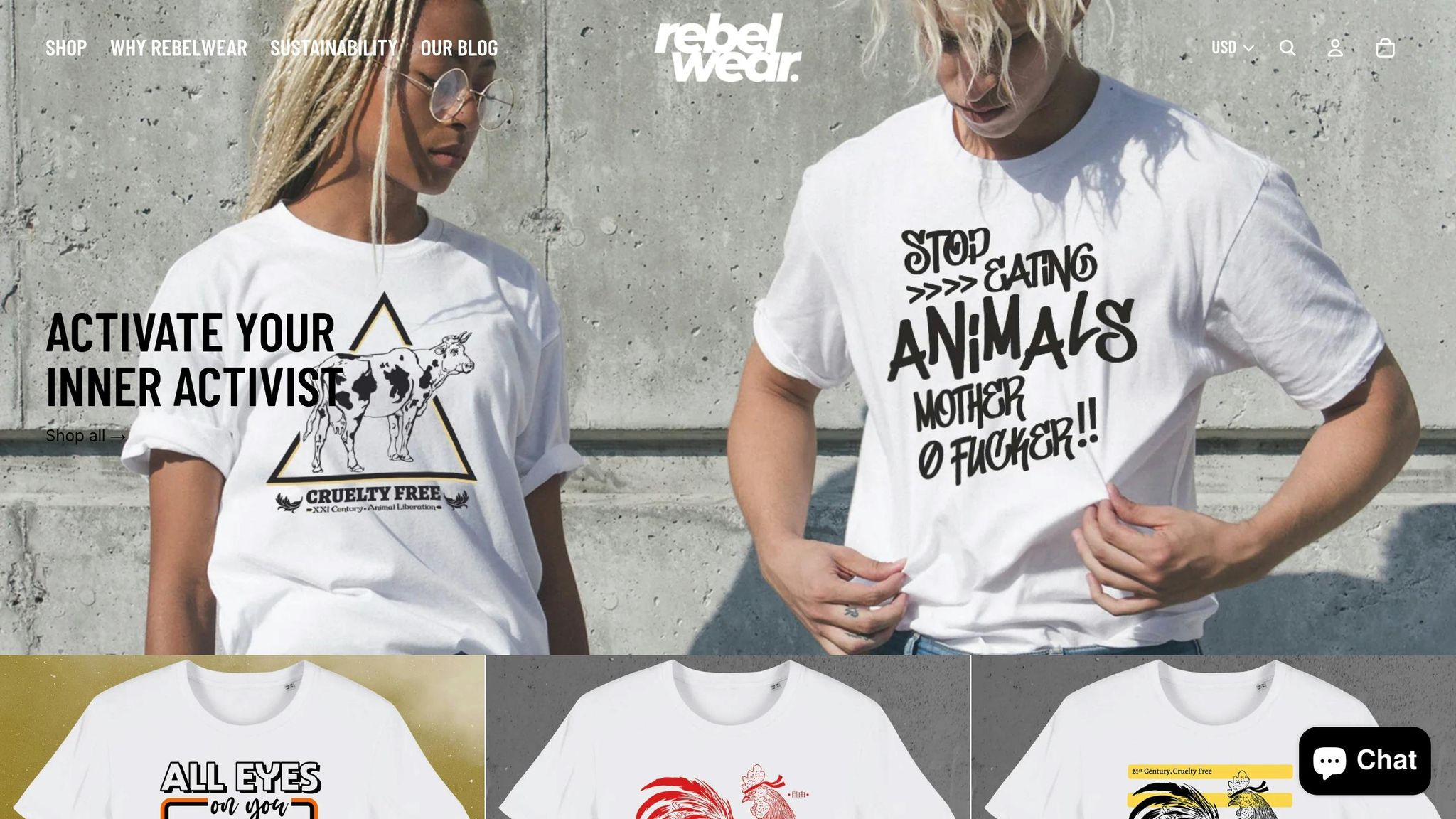
Here’s a snapshot of Rebelwear UK's collections, showcasing their ethical approach and accessible price points:
| Collection | Price | Description | Key Features | Availability |
|---|---|---|---|---|
| Standard Products | ~£25 | Activist-themed apparel and accessories | Unique designs with diverse slogans | Online |
| Retro Collection | ~£25 | Retro-inspired activist designs | Vintage aesthetics | Online |
| Free Palestine Collection | ~£16 | Apparel supporting the Free Palestine movement | Focused messaging and affordability | Online |
Rebelwear UK’s reasonable pricing makes it easy to build a wardrobe of statement pieces that uphold your ethical values while encouraging thoughtful conversations.
sbb-itb-24fa5d9
Incorporating Apparel That Promotes Meaningful Causes
Activist apparel turns everyday clothing into a platform for advocacy. By wearing these pieces, you’re not just making a fashion statement - you’re opening the door to conversations and raising awareness for the causes you care about.
Examples of Activist Apparel
The best activist clothing combines clear, impactful messaging with thoughtful design. Slogan t-shirts are a classic choice, offering a straightforward way to share your values. For instance, Rebelwear UK’s designs like "Be The Change" encourage personal and collective responsibility, while "Stop Eating Animals" promotes animal rights and veganism. These pieces are not just stylish - they’re conversation starters.
Cause-specific collections focus on particular movements, making it easier to align your wardrobe with your passions. Take the Free Palestine collection, for example. With items priced around £16, it’s an accessible way to advocate for humanitarian issues while keeping the message clear and focused.
Statement accessories such as badges, tote bags, and caps extend the reach of activist messaging. These smaller items are perfect for sparking casual conversations throughout your day - whether you’re at the shop, on public transport, or at work.
Graphic designs that blend visuals and text can communicate layered messages in a single glance. Environmental activism, for example, often uses striking imagery like endangered species, climate statistics, or pollution visuals to create an immediate emotional and intellectual impact.
These diverse formats ensure your stance is visible and help create opportunities for meaningful dialogue in everyday life.
The Power of Visible Messaging
Wearing activist clothing is a form of what sociologists call "micro-activism" - small, everyday actions that contribute to larger social movements. A simple t-shirt or tote bag can act as a mobile billboard, exposing dozens of people to ideas they might not otherwise encounter.
Conversation starters naturally arise when you wear bold, thought-provoking messages. A "Be The Change" t-shirt might lead someone to ask about your role in community initiatives, while animal rights slogans often spark discussions about ethical eating habits. These informal, personal exchanges can sometimes have a greater impact than organised activism because they feel more relatable and genuine.
Normalising activism happens when people regularly see these messages in their daily lives. Over time, what might have seemed fringe or niche becomes part of mainstream dialogue. This visibility is particularly influential for younger generations as they shape their own social and political perspectives.
Building connections is another powerful outcome. Activist apparel helps like-minded individuals identify each other, creating opportunities for collaboration and solidarity. Many people find new friends or partners in advocacy simply through the conversations sparked by their clothing choices.
Focus on UK-Specific Causes
To make an even stronger impact, consider aligning your activist apparel with local issues. This not only amplifies your message but also strengthens your connection to your community.
In the UK, several pressing concerns lend themselves well to clothing-based advocacy. Climate action is a prominent topic, especially with the country’s commitment to achieving net-zero emissions by 2050. Messages about renewable energy, fossil fuel divestment, or local environmental challenges like flooding and air pollution resonate with many.
Housing justice is another critical issue, with themes around affordable housing, tenant rights, and homelessness awareness reflecting struggles faced by millions. Slogans supporting social housing or opposing gentrification highlight these concerns.
NHS protection is a deeply personal cause for many in the UK. Clothing that defends the NHS against privatisation or celebrates healthcare workers remains especially relevant in the wake of the pandemic.
Workers' rights messaging addresses challenges like zero-hours contracts, fair wages, and union representation. Apparel advocating for dignity and fairness in the workplace speaks to shared experiences across industries.
Refugee and immigrant solidarity designs challenge hostile policies and promote compassion for displaced individuals. These messages advocate for humane approaches to immigration and asylum, pushing back against divisive rhetoric.
Whatever cause speaks to you, choose apparel that authentically reflects your values. Whether you’re championing environmental protection, social justice, or human rights, your wardrobe becomes a tool for advocacy - one that sparks conversations and inspires action every single day.
Building and Maintaining an Ethical Wardrobe
Creating an ethical wardrobe that aligns with your values involves thoughtful planning, sustainable choices, and proper care. By focusing on these areas, you can reduce waste, extend the life of your clothing, and make a meaningful statement through what you wear.
Creating a Capsule Wardrobe
A capsule wardrobe is a curated collection of versatile pieces that work together, helping you minimise consumption while maximising style and purpose.
Start with essential items that can be mixed and matched for various occasions. For example, an activist t-shirt priced around £24 can easily transition from casual to professional when paired with jeans or layered under a blazer. These core items form the foundation of your wardrobe.
Stick to two or three complementary colours to ensure everything works together. For instance, black, white, and an accent colour allow you to mix and match effortlessly. This approach ensures that even cause-specific pieces, like a Free Palestine collection item, integrate seamlessly with the rest of your wardrobe.
Layering and accessorising can help you adapt to different seasons while keeping your message visible. Lightweight activist t-shirts can be worn under jackets or cardigans in colder months, and accessories like caps or tote bags can carry your message when bulky coats cover your clothing.
When it comes to spending, it’s smart to prioritise investment in quality over quantity. A high-quality organic cotton t-shirt with a timeless message may cost more upfront, but it offers better long-term value. For example, a £24 t-shirt worn twice a month for two years comes out to just 50p per wear. This approach ensures your wardrobe remains both ethical and economical.
To expand your collection, consider exploring second-hand and upcycled options.
Sourcing Second-Hand and Upcycled Items
Adding second-hand and upcycled pieces to your wardrobe not only complements the capsule approach but also reduces waste. The UK offers plenty of opportunities to find unique and ethical items while supporting charitable causes.
- Charity shops are a great starting point. Stores like Oxfam often stock band t-shirts and vintage pieces with social messages, while British Heart Foundation shops carry quality basics perfect for customisation. Many now offer online shopping, making it even easier to find what you need.
- Vintage markets in cities like London, Manchester, and Brighton provide curated selections of retro activist clothing. Places like Camden Market, Afflecks, and The Lanes are treasure troves for vintage band merch and campaign apparel, often adding a historical touch to your wardrobe.
- Online platforms such as Vinted, Depop, and Facebook Marketplace make it simple to search for specific items like "protest t-shirts" or "activist clothing." Many sellers offer bundles, which can save money and lower the environmental impact of shipping.
- Upcycling is another creative avenue. You can transform basic second-hand t-shirts, hoodies, or tote bags from charity shops into personalised statement pieces using screen printing, embroidery, or fabric paint. This method is budget-friendly and lets you create one-of-a-kind items that reflect your values.
- Community swaps and clothing exchanges are fantastic for sharing activist apparel. Universities, community centres, and activist groups across the UK often host swap events, allowing you to trade items you no longer wear for new-to-you pieces.
Comparison Table of Wardrobe-Building Methods
| Method | Initial Cost | Environmental Impact | Time Investment | Uniqueness | Longevity |
|---|---|---|---|---|---|
| New Ethical Purchases | £15-£30 per item | Medium (uses sustainable materials) | Low (readily available) | Medium (limited designs) | High (quality materials) |
| Second-Hand Sourcing | £2-£10 per item | Low (extends garment life) | Medium (requires searching) | High (vintage finds) | Variable (depends on condition) |
| Upcycling Projects | £5-£15 per item | Very Low (repurposes existing items) | High (DIY effort needed) | Very High (custom designs) | Medium (depends on skills) |
Extending the Life of Your Wardrobe
Proper maintenance is crucial for any ethical wardrobe. Simple washing techniques can make a big difference. Turn graphic t-shirts inside out, wash them in cold water, and air dry to preserve both fabric and printed designs. This routine can double the lifespan of your garments.
Learning basic sewing skills is another way to keep your wardrobe in top shape. Repairing small tears or loose seams can significantly extend the life of your favourite pieces. Many UK libraries and community centres offer free sewing workshops, making it easy to pick up these skills.
Finally, plan your wardrobe rotation to ensure all your items get regular use. By rotating pieces weekly or monthly, you can avoid overusing favourites and keep your wardrobe - and your advocacy - fresh. This strategy not only maximises the impact of your collection but also helps you stay committed to your values over the long term.
Conclusion: The Influence of an Activist Wardrobe
Your wardrobe can be more than just a collection of clothes - it can be a statement of your values, sparking conversations and inspiring change. Every time you choose to buy ethically, you send a clear signal to the fashion industry: consumers care about transparency, fair wages, and responsible practices.
By following the practical steps mentioned earlier, your clothing choices can become a form of activism. Whether you're supporting ethical brands or shopping second-hand, you're contributing to a larger movement that proves responsible fashion is within reach. When you wear pieces that reflect your values - be it a pre-loved item or a well-made garment designed to last - you show that ethical decisions can promote fair treatment for workers, support environmental efforts, and help responsible brands thrive.
An activist wardrobe also serves as a daily connection to your beliefs. Each item you wear becomes a reminder of your commitment to positive change, encouraging actions like volunteering, donating, or starting meaningful conversations about issues that matter to you.
As more people embrace ethical fashion, the collective impact grows, pushing the industry toward fairness and sustainability. Your wardrobe becomes part of a movement that prioritises people and the planet over profit, proving that change is not only possible but also wearable.
FAQs
How can I check if ethical certifications on clothing are genuine?
When checking for ethical certifications, keep an eye out for recognised logos from trusted organisations like GOTS, OCS, GRS, or the Fair Wear Foundation. These symbols reflect adherence to specific ethical and sustainability standards.
To dig deeper, take a moment to research the certifying body. Most organisations share transparent details online about their certification processes and the requirements brands need to fulfil. This extra step can help you shop smarter and ensure your clothing choices align with your personal values.
How can I add second-hand and upcycled clothing to my activist wardrobe?
Adding second-hand and upcycled clothing to your wardrobe is a great way to express your style while staying true to your values. Plus, it’s a step towards reducing waste and embracing more sustainable choices. A good place to start is by checking out local charity shops or thrift stores. These places are treasure troves of unique, affordable pieces that come with a much smaller environmental footprint.
Another option is upcycling clothes you already own. With a bit of creativity, you can breathe new life into old outfits. Think about sewing on some fun patches, experimenting with dye, or making simple alterations to refresh your look. Not only does this cut down on waste, but it also allows you to craft a wardrobe that feels personal and reflects your commitment to ethical fashion.
Why is ethical fashion a better long-term investment than fast fashion?
Ethical fashion stands out as a thoughtful long-term choice because it emphasises quality and longevity. These garments are crafted with better materials and attention to detail, ensuring they outlast the fleeting lifespan of fast fashion items. Over time, this translates to a much lower cost per wear, making them a savvy investment.
On the other hand, fast fashion often relies on lower-quality fabrics and shortcuts in production, causing items to wear out quickly and require frequent replacements. Opting for ethical clothing not only stretches your budget further in the long run but also aligns with values like fair labour practices and environmentally conscious production.